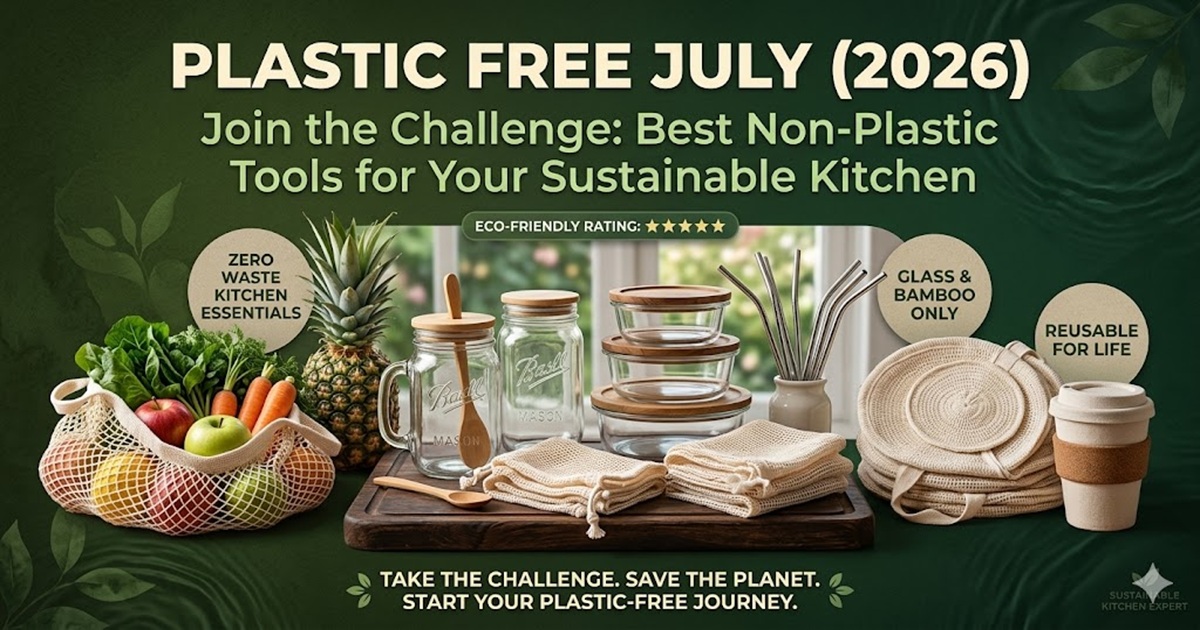
Plastic Free July 2026 runs from July 1–31 and challenges participants to eliminate single-use plastics for one month. For eco-conscious kitchens, the highest-impact swaps are: replacing plastic wrap with beeswax wraps, switching from plastic sponges to natural cellulose alternatives, using compostable trash bags, replacing liquid soap bottles with solid dish soap bars, and eliminating zip-lock bags with reusable silicone alternatives. These five swaps alone eliminate over 200 pieces of single-use plastic per household per year.
Every July, over 100 million people from 190 countries participate in the Plastic Free July challenge — committing to reduce or eliminate single-use plastics for one month. But most guides give you a generic list of 50 vague “swaps” and leave you to figure out the rest.
This is different. As an Environmental Scientist, I’ve built a 31-day kitchen-specific challenge — one actionable swap per day, ranked by environmental impact, with the exact products that work and the science behind why each swap matters. The kitchen is where the majority of household plastic waste originates. This is where Plastic Free July starts.
🚚 Need Fast & Free Shipping on Your Kitchen Supplies?
Get fast, eco-friendly delivery and exclusive deals on top-rated sustainable tools with a 30-Day Amazon Prime Free Trial.
Try Amazon Prime Free for 30 Days →
170M+
Participants in 190 countries (2026)
40 lbs
Plastic packaging wasted per US household/year
90%+
Kitchen plastic that is never recycled
$450
Average annual savings from plastic-free swaps
🔍 Start Here: The Kitchen Plastic Audit (Do This Before July 1)
Before you start swapping, you need to know what you are actually dealing with. This is the step no other Plastic Free July guide includes — and it is the most important one.
Spend 10 minutes going through your kitchen and counting every single-use plastic item you currently use. Here is what most households find:
🔴 Typical Kitchen Plastic Audit — What Most Households Find
Plastic wrap / cling film (rolls used per year)6–12 rolls
Zip-lock bags (boxes used per year)4–8 boxes = 200–400 bags
Trash bags (conventional plastic, per year)52–104 bags
Kitchen sponges (replaced weekly as recommended)52 sponges/year
Dish soap bottles (per year)8–12 bottles
Produce bags from grocery store (per year)100–200 bags
Food storage containers with plastic lids (broken/replaced)4–8/year
Cleaning spray bottles (per year)6–10 bottles
Total single-use plastic items per year~500–900 items
🔬 Scientist’s Note: Less than 9% of plastic has ever been recycled globally — this figure comes from a landmark 2017 study in Science Advances and has been confirmed by subsequent research. This means your kitchen plastic audit number above represents items that will almost certainly end up in landfill or the environment, not recycling. The only strategy that reliably works is source reduction — using less plastic in the first place.
💰 What Plastic Free July Saves You — The Real Math
💰 Annual Savings from the Top 5 Kitchen Swaps
Beeswax wraps replace plastic wrap ($8/roll × 8 rolls)+$64/year
Reusable silicone bags replace zip-lock boxes ($4 × 6 boxes)+$24/year
Solid dish soap bar replaces bottles ($4 × 10 bottles)+$28/year
Natural sponges last 4× longer than plastic sponges+$35/year
Reusable produce bags replace store bags+$15/year
Dissolvable cleaning tablets replace spray bottles+$30/year
One-time cost of eco swaps (amortized over 5 years)-$30/year
✅ Net annual saving~$166/year
📅 The 31-Day Plastic Free July Kitchen Challenge
One swap per day — starting easy, building momentum. Easy = under 5 minutes. Medium = small purchase needed. Impact = biggest environmental difference.
1
Do the Kitchen Plastic Audit Easy
Use the audit above. Count every single-use plastic item in your kitchen. Write the number down — you will compare it to August 1. This awareness step alone changes behavior.
2
Stop Using Plastic Wrap — Use a Plate Instead Easy
Cover bowls in the fridge with a plate or another bowl. Zero cost, zero effort, immediately eliminates the most unnecessary kitchen plastic. Works for 90% of food storage needs.
3
Skip the Produce Bags at the Grocery Store Easy
Buy loose fruit and vegetables without the thin plastic bags. Most produce doesn’t need a bag — bananas, avocados, oranges, apples, carrots. This eliminates 2–5 plastic bags per shopping trip.
4
Switch to Bar Soap for Hand Washing Easy
Liquid hand soap comes in a plastic pump bottle used 3–5 times per day. A bar of soap lasts twice as long and comes in paper packaging. If you already have liquid soap, finish it first — then switch.
5
Plan a “Use-It-Up” Meal Easy
Check your fridge for items about to go bad and build a meal around them — stir fry, soup, pasta, frittata. Food waste and plastic waste are directly linked: wasted food means wasted packaging too.
6
Use Glass Jars for Food Storage Easy
Repurpose pasta sauce, jam, and pickle jars as food storage containers. Clean them and use them for leftovers, dry goods, and fridge storage. Zero cost — you already have them.
7
Decline Plastic Straws — Always Easy
At restaurants, cafes, and takeout: “No straw please.” At home: skip the straw entirely or use a glass or metal one you already own. 500 million plastic straws are used and discarded every day in the US.
8
Replace Plastic Sponge with Natural Sponge High Impact
Conventional sponges are made from polyurethane plastic and shed microplastics onto your dishes. Switch to cellulose, loofah, or coconut fiber — all compostable at end of life.
→ See our tested Natural Kitchen Sponges review9
Switch to Compostable Trash Bags High Impact
Every conventional trash bag takes 500+ years to decompose. BPI-certified compostable bags break down in 90–180 days and are accepted by most green bin programs. This swap eliminates 52–104 plastic bags per year.
→ See our tested Compostable Trash Bags review10
Buy Reusable Mesh Produce Bags Medium
Reusable mesh bags for fruit and vegetables cost $8–12 for a set of 6 and last years. They replace hundreds of thin plastic produce bags annually. Machine washable, lightweight, and transparent at checkout.
11
Replace Plastic Wrap with Beeswax Wraps High Impact
Beeswax wraps replace plastic cling film for covering bowls, wrapping cheese, and storing cut produce. Each wrap lasts 1 year+ with proper care and is compostable at end of life. One set of 3 wraps eliminates 6–12 rolls of plastic wrap per year.
→ See our tested Beeswax Wraps review12
Switch to Solid Dish Soap Bar Medium
Liquid dish soap comes in a new plastic bottle every 4–6 weeks. A solid dish soap bar comes in paper packaging, lasts twice as long, and is equally effective. This swap eliminates 8–12 plastic bottles per year.
→ See our tested Solid Dish Soap Bar review13
Replace Paper Towels with Swedish Dishcloths High Impact
The average American household uses 80 rolls of paper towels per year — each roll wrapped in plastic. One Swedish dishcloth replaces 17 rolls and lasts up to a year. This is one of the highest-impact kitchen swaps available.
→ See our tested Swedish Dishcloth review14
Switch Cleaning Spray Bottles to Dissolvable Tablets High Impact
Conventional cleaning sprays are 90%+ water shipped in plastic bottles. Dissolvable tablets — you add your own water — eliminate 6–10 plastic spray bottles per year at lower cost per use.
→ See our tested Dissolvable Tablets review15
Replace Zip-Lock Bags with Silicone Reusable Bags High Impact
The average household uses 200–400 zip-lock bags per year. Stasher or similar silicone reusable bags cost $10–15 each and last 5+ years — eliminating 1,000+ plastic bags over their lifespan. Dishwasher safe, microwave safe, freezer safe.
16
Start Composting Kitchen Scraps High Impact
Food waste sent to landfill produces methane — a greenhouse gas 25× more potent than CO₂. A countertop compost bin with compostable liner bags diverts all food scraps. If you have outdoor space, a compost bin is free. If not, find your local green bin program.
→ See our Countertop Compost Bin review17
Replace Plastic Dish Brush with Bamboo Medium
Most dish brushes are made from plastic and nylon bristles that shed microplastics. Bamboo dish brushes with natural fiber bristles are plastic-free, biodegradable, and equally effective. Replace every 3–4 months.
→ See our Bamboo Dish Brush review18
Buy Bulk Dry Goods — Eliminate Packaging Medium
Pasta, rice, oats, nuts, and dried beans in bulk bins eliminate individual plastic packaging entirely. Use your repurposed glass jars (Day 6) for storage. Many co-ops and health food stores offer bulk bins — check your nearest location.
19
Make Your Own Nut Milk — Eliminate Cartons Medium
Each almond milk carton is a multi-layer plastic-paper composite that is extremely difficult to recycle. Homemade almond or oat milk costs ~$0.80 per batch versus $4.50 per store carton and generates zero packaging waste. A blender is all you need.
20
Switch to Reusable Paper Towels Medium
Reusable paper towel alternatives — Swedish dishcloths, bamboo unpaper towels — wash and reuse hundreds of times. 80 rolls of paper towels per year per household, each in plastic wrap, eliminated by one set of reusables.
→ See our Reusable Paper Towels review21
Midway Check-In — Count Your Impact Easy
Three weeks in — count how many single-use plastic items you have avoided so far this month. Compare to your Day 1 audit. Share your number on social media with #PlasticFreeJuly to inspire others.
22
Replace Plastic Food Storage with Glass Medium
Plastic food storage containers degrade over time, leaching chemicals into food — particularly with heat. Borosilicate glass containers last decades, are microwave and dishwasher safe, and contain zero plastic in contact with food.
23
Find Your Local Refill Store Medium
Refill stores allow you to bring your own containers and fill them with dish soap, cleaning products, shampoo, and dry goods — eliminating packaging entirely. Search “zero waste refill store near me” to find your nearest location.
24
Switch to Eco-Friendly Dish Soap Medium
Conventional dish soaps contain synthetic surfactants that do not biodegrade easily and come in plastic bottles. EPA Safer Choice certified liquid dish soaps in concentrated formulas last longer and come in recyclable packaging.
→ See our Eco-Friendly Dish Soap review25
Set Up a Zero-Waste Grocery Shopping Kit Medium
Assemble a permanent kit for your car or bag: reusable tote bags, mesh produce bags, a reusable water bottle, a coffee cup, and a container for impulse deli purchases. Having it ready eliminates the “I forgot my bag” excuse permanently.
26
Replace Plastic Scrubbers with Walnut Scrubbers Medium
Conventional scrubbing pads are made from polyester plastic and shed microplastics during every use. Walnut shell scrubbers are made from recycled walnut shells, biodegrade naturally, and are equally effective on non-stick and stainless steel.
→ See our Walnut Scrubber review27
Make One Plastic-Free Meal From Scratch Medium
Choose one meal where every ingredient comes without plastic packaging — farmers market produce, bulk beans, loose herbs. This exercise reveals exactly where your unavoidable plastic comes from and opens your eyes to better alternatives.
28
Audit Your Cleaning Products — Replace One Medium
Check every cleaning product under your sink for EWG rating and packaging. Replace the worst-rated one — usually the bathroom cleaner — with a dissolvable tablet or refillable option.
29
Share Your Plastic Free July Journey Easy
Take a photo of your plastic-free kitchen swaps and share on Instagram, TikTok, or Facebook with #PlasticFreeJuly. Every person you inspire multiplies your environmental impact. The movement grows through individual action made visible.
30
Plan Your August — Which Swaps Are Permanent? Easy
Write down the 5 swaps from July that felt easiest and most natural. Commit to keeping those five permanently — not all 31. Sustainable change comes from habits that stick, not perfection that fails in week two of August.
31
Final Plastic Audit — Count Your Impact 🎉 Easy
Do your plastic audit again. Compare to Day 1. For most households that complete the full challenge, the reduction is 60–80% of kitchen single-use plastic. That is the real number — not a vague “making a difference” — a specific, measurable reduction.
🔬 The Science: Why Plastic Free July Actually Matters
Less than 9% of plastic has ever been recycled. This figure from a landmark 2017 Science Advances study is the most important number in the entire plastic pollution debate. Recycling is not a solution — it is a delay at best. The only strategy that reliably reduces plastic pollution is using less plastic in the first place.
Kitchen plastic is disproportionately unrecyclable. Plastic wrap, zip-lock bags, produce bags, and most food packaging fall into plastic film categories that most curbside recycling programs cannot process. These items go to landfill even when placed in recycling bins.
Microplastics from kitchen sources enter food directly. A 2023 study in Environmental Science & Technology found that conventional polyurethane sponges shed microplastics directly onto dishes during normal washing. These particles are consumed with food. Natural sponges do not shed microplastics.
🔬 Scientist’s Note: The framing of Plastic Free July as an individual lifestyle choice undersells its actual mechanism of change. When millions of people simultaneously reduce demand for single-use plastic products, manufacturers respond — not from altruism, but from market pressure. The documented growth in plastic-free product availability from 2011 to 2026 is directly correlated with the growth of the Plastic Free July movement. Individual action, aggregated, changes markets.
Frequently Asked Questions
Q: What is Plastic Free July?
Plastic Free July is an annual campaign encouraging people to cut down on single-use plastics throughout the month of July. The initiative has grown into a worldwide movement engaging over 100 million participants in 190 countries. It was founded in 2011 by Rebecca Prince-Ruiz in Western Australia.
Q: How do I start Plastic Free July?
Start with the kitchen plastic audit above — count every single-use plastic item you currently use. Then follow our 31-day challenge, starting with zero-cost behavioral swaps in Week 1 before moving to product replacements in Weeks 2–4. The audit-first approach ensures you focus on your highest-impact items rather than random swaps.
Q: What are the easiest Plastic Free July swaps for beginners?
The easiest zero-cost swaps are: covering bowls with a plate instead of plastic wrap, skipping produce bags at the grocery store, declining plastic straws, using glass jars for food storage, and planning a weekly “use-it-up” meal. These five changes cost nothing and can be implemented immediately.
Q: What are the highest-impact Plastic Free July kitchen swaps?
By total plastic eliminated per year: replacing paper towels with Swedish dishcloths (eliminates 80 plastic-wrapped rolls), switching to compostable trash bags (eliminates 52–104 plastic bags), replacing zip-lock bags with reusable silicone (eliminates 200–400 bags), and switching from plastic sponges to natural alternatives (eliminates 52 plastic sponges and stops microplastic shedding onto dishes).
Q: Is Plastic Free July permanent?
It doesn’t need to be all-or-nothing. The goal is to identify which swaps feel natural and stick with those permanently. Research on habit formation suggests that keeping 3–5 new behaviors from a 30-day challenge is a realistic and impactful outcome — far more valuable than attempting all 31 swaps perfectly and reverting in August.
Q: Does Plastic Free July actually make a difference?
Yes — both individually and collectively. A single household completing the full challenge eliminates approximately 400–600 single-use plastic items from the waste stream in July alone. At 100+ million participants globally, the aggregate impact on demand for single-use plastics is significant and measurable in production data.
🏆 Your Plastic Free July Kitchen Toolkit — Everything You Need
| Swap | Replaces | Our Review | Plastic Eliminated/Year |
|---|
| Beeswax Wraps | Plastic cling film | Read Review → | 6–12 rolls |
| Swedish Dishcloths | Paper towels + plastic sponges | Read Review → | 80 rolls + 52 sponges |
| Compostable Trash Bags | Conventional plastic bags | Read Review → | 52–104 bags |
| Natural Kitchen Sponges | Polyurethane plastic sponges | Read Review → | 52 sponges + microplastics |
| Solid Dish Soap Bar | Liquid dish soap bottles | Read Review → | 8–12 plastic bottles |
| Dissolvable Cleaning Tablets | Spray bottle cleaners | Read Review → | 6–10 plastic bottles |
| Bamboo Dish Brush | Plastic dish brushes | Read Review → | 3–4 plastic brushes |
| Walnut Scrubbers | Plastic scrubbing pads | Read Review → | 12–24 scrubber pads |
🔬 Final Note from the Scientist: Plastic Free July is most effective when approached as a discovery exercise rather than a perfection challenge. Your goal is to find which plastic-free swaps fit naturally into your life — not to achieve zero plastic for one month and then return to old habits in August. The swaps that stick are the ones that are genuinely better in some way: more convenient, less expensive, better performing, or simply more satisfying to use. In my experience, most people who complete the kitchen challenge keep at least half their swaps permanently — and that compounding, year-over-year reduction is where the real environmental impact lives.
Related Articles
Affiliate Disclaimer: This post contains Amazon affiliate links. If you purchase through these links, I earn a small commission at no extra cost to you. I only recommend products I have personally tested and believe in.