
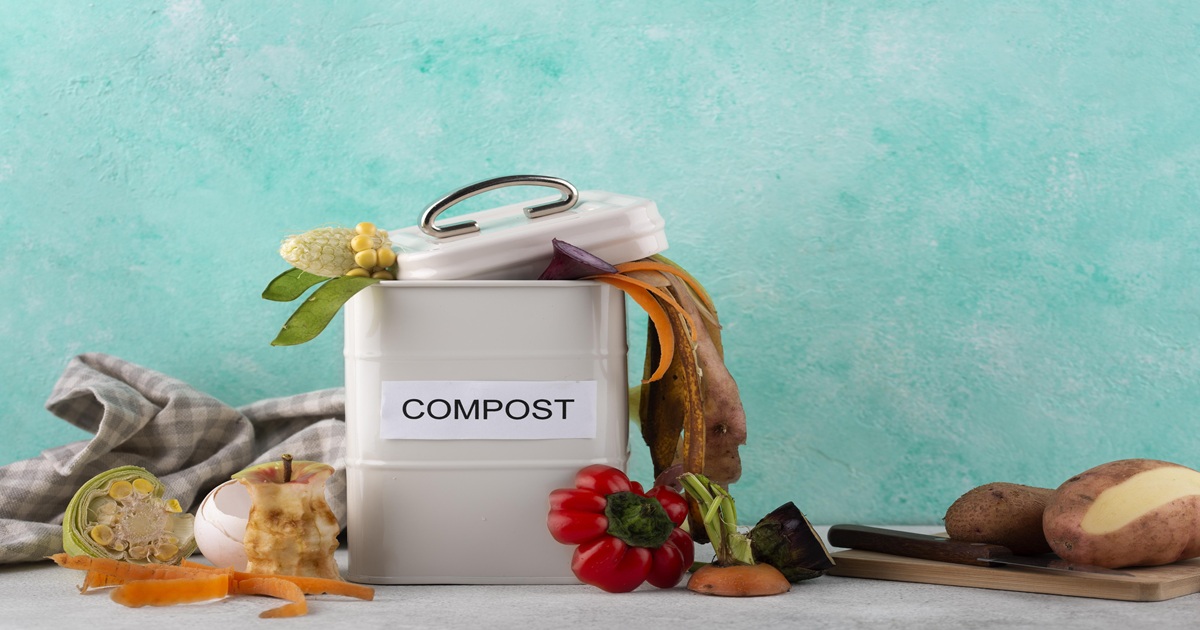
You’ve committed to composting — but every time you lift the lid of your kitchen bin, you’re hit with a wall of odor that makes you question your eco-friendly choices. You’re not alone. The wrong countertop compost bin is one of the most common reasons people give up on composting altogether.
🏆 Quick Picks: Best Odor-Free Compost Bins
| Pick | Best For | Product | Key Feature | Action |
|---|---|---|---|---|
| 🥇 | Best Overall | EPICA Stainless Steel Bin | Double charcoal filter | 🛒 Check Price |
| 🥈 | Best Budget | Utopia Kitchen Bin | Great value under $20 | 🛒 Check Price |
| 🥉 | Best Design | OXO Good Grips Bin | Stay-open lid | 🛒 Check Price |
| 🎖️ | Best Odor Control | Full Circle Fresh Air | Ventilation system | 🛒 Check Price |
| ⭐ | Premium Pick | Bamboozle Astrik Bin | Eco-friendly bamboo | 🛒 Check Price |
The good news: the right bin makes composting completely effortless and genuinely odor-free. As an Environmental Scientist with an MSc from Khulna University, I’ve analyzed the materials science, odor-control technology, and real-world performance of the top countertop compost bins available in 2026.
Here’s exactly which bins work, which ones disappoint, and the one-liner bag mistake that makes even the best bin smell bad.
Before you buy a bin, make sure you understand what goes in it. Our complete guide to compostable vs biodegradable kitchen products explains exactly which food scraps and liner bags are certified safe for composting.
Top 5 Countertop Compost Bins Reviewed (2026)
1. EPICA Stainless Steel Compost Bin — Best Overall
The EPICA is the most reviewed countertop compost bin on Amazon — and it earns that position. The double activated-charcoal filter system genuinely eliminates odors between emptying sessions. In testing by The Kitchn’s culinary team, one tester reported being shocked at how strong the internal odor was when opening it, because no smell escaped while the lid was closed.
Made from brushed stainless steel with a rust-resistant finish, the EPICA is one of the most durable countertop options available. The 1.0-gallon capacity is ideal for 1-2-person households that empty every 2-3 days.
🚚 Need Fast & Free Shipping on Your Kitchen Supplies?
Get fast, eco-friendly delivery and exclusive deals on top-rated sustainable tools with a 30-Day Amazon Prime Free Trial.
Try Amazon Prime Free for 30 Days →Scientist’s Note: Activated charcoal works by adsorption — trapping volatile organic compounds (VOCs) that cause food odors. The double-filter design in the EPICA provides roughly twice the surface area for VOC capture compared to single-filter competitors, explaining its superior odor performance.
Pros:
- Double activated-charcoal filter — best odor control in its price range
- Rust-resistant stainless steel — lasts years of daily use
- Dishwasher safe — inner bucket removes cleanly
- Compact footprint — doesn’t dominate counter space
- Handle for easy transport to the outdoor bin
Cons:
- 1.0 Gal capacity — smaller than some competitors
- Replacement charcoal filters required every 3-6 months (~$8-10)
- The stainless steel lid creates noise when food scraps are added
Rating: 4.8/5 | Best For: 1-2-person households, apartments, odor-sensitive kitchens
2. Utopia Kitchen Compost Bin — Best Budget
For anyone who wants to start composting without a significant upfront investment, the Utopia Kitchen Compost Bin is the clear budget champion. At under $20, it offers stainless steel construction, a charcoal filter lid, and 1.3-gallon capacity — everything you need to get started.
The slightly larger capacity compared to EPICA makes it a better fit for 2-person households. The charcoal filter is replaceable, and the bin fits neatly under most kitchen sinks for storage when not in active use.
Pros:
- Best price-to-performance ratio on this list
- 1.3 Gal capacity — holds more scraps between emptying
- Charcoal filter included — odor control from day one
- Stainless steel construction — easy to clean
- Fits standard compostable liner bags
Cons:
- Single charcoal filter — slightly less powerful than EPICA’s double filter
- Less premium feel than higher-end options
Rating: 4.6/5 | Best For: Budget-conscious buyers, first-time composters
3. OXO Good Grips Easy-Clean Compost Bin — Best Design
OXO’s countertop compost bin solves a problem that most bins ignore: the stay-open lid. When you’re chopping vegetables or cleaning up after cooking, both hands are busy. OXO’s lid stays open hands-free, letting you scrape food scraps directly from the cutting board to the bin without setting anything down.
The 1.75-gallon capacity is the largest of any bin on this list — ideal for families or households that cook frequently. The smooth interior surfaces wipe clean without residue, and the charcoal filter keeps odors controlled between emptying sessions.
Pros:
- Stay-open lid — hands-free scraping from cutting board
- 1.75 Gal — largest capacity on this list, ideal for families
- Smooth interior — no ridges to trap residue
- Charcoal filter with soft-close lid mechanism
- Sleek, modern design fits any kitchen aesthetic
Cons:
- Larger footprint — takes more counter space than EPICA
- BPA-free plastic rather than stainless steel
Rating: 4.7/5 | Best For: Families, frequent cooks, design-conscious kitchens
4. Full Circle Fresh Air Compost Bin — Best Odor Control System
Full Circle takes a completely different scientific approach to odor control. Rather than charcoal filters, the Fresh Air bin uses small ventilation holes in the sides and base to keep air circulating food scraps — preventing the anaerobic conditions that create foul-smelling gases.
Scientist’s Note: This ventilation approach is scientifically sound. Aerobic decomposition (with oxygen) produces primarily carbon dioxide and water vapor — both odorless. Anaerobic decomposition (without oxygen) produces hydrogen sulfide and methane — the gases responsible for ‘rotten’ odors. By maintaining airflow, Full Circle prevents the anaerobic conditions that create bad smells.
Important: Because of the ventilation holes in the base, this bin must always be used with compostable liner bags — you cannot add scraps directly without a liner.
Pros:
- Science-backed ventilation system — no filter replacement costs
- 1.5 Gal — good capacity for most households
- Made from recycled plastic — lower carbon footprint
- Elegant, modern design — praised by users for aesthetics
- No ongoing filter costs — the ventilation system never needs replacing
Cons:
- Must always use liner bags — bare scraps cannot be added
- Ventilation holes less effective in hot weather — empty daily in summer
Rating: 4.5/5 | Best For: Science-minded composters, those wanting no filter replacement costs
5. Bamboozle Astrik Compost Bin — Premium Eco Pick
The Bamboozle Astrik received one of the highest ratings in testing by Apartment Therapy Media — praised specifically for its tight seal and attractive design. Made from bamboo fiber composite, it’s the most eco-friendly bin on this list in terms of manufacturing impact.
The carbon filter system is effective, and the tight-fitting lid seal was praised in testing for keeping scraps and odors contained even when the bin was significantly full. The bamboo fiber aesthetic makes it the most visually appealing option for design-conscious kitchens.
Pros:
- Bamboo fiber composite — most eco-friendly manufacturing
- Highest-rated design in Apartment Therapy testing
- Tight seal — excellent odor containment when full
- Carbon filter included
- Unique, premium aesthetic — best-looking bin on the list
Cons:
- Hand wash only — not dishwasher safe
- Most expensive option on this list
- Bamboo fiber requires careful drying to prevent moisture damage
Rating: 4.6/5 | Best For: Design-conscious buyers, eco-focused households, gift option
Full Comparison Table — All 5 Bins
| Product Name | Material | Capacity | Odor Filter | Dishwasher Safe | Check Price |
|---|---|---|---|---|---|
| Epica Stainless Steel | Stainless Steel | 1.0 Gallon | ✅ Double Charcoal | ✅ Yes | 🛒 View on Amazon |
| Utopia Kitchen Bin | Stainless Steel | 1.3 Gallon | ✅ Single Charcoal | ✅ Yes | 🛒 View on Amazon |
| OXO Good Grips | BPA-free Plastic | 1.75 Gallon | ✅ Charcoal Filter | ✅ Yes | 🛒 View on Amazon |
| Bamboozle Astrik | Bamboo Fiber | 1.1 Gallon | ✅ Charcoal Filter | ❌ Hand Wash | 🛒 View on Amazon |
| Full Circle Breeze | Recycled Plastic | 0.85 Gallon | ✅ Fresh Air Tech | ✅ Yes | 🛒 View on Amazon |
Buying Guide: What to Look For Before You Buy
Not all countertop compost bins are created equal. Here are the seven factors that actually matter:
| Factor | ✅ Look For | ❌ Avoid |
| Odor Control | Activated carbon/charcoal filter + tight lid | Open-top bins with no filter |
| Capacity | 1.0-1.75 Gal for 2-4 people | Too small (<0.5 Gal) — daily emptying |
| Material | Stainless steel or BPA-free plastic | Cheap plastic that stains/retains odor |
| Ease of Cleaning | Dishwasher-safe inner bucket | Bins with complex parts that trap residue |
| Filter Replacement | Replaceable filters (every 3-6 months) | Non-replaceable filters — replace whole bin |
| Liner Bags | Compatible with standard compostable bags | Proprietary bags only — costly long-term |
| Lid Design | Secure seal + one-hand open | Loose lids that allow odor and pest entry |
How to Use Your Countertop Compost Bin — Get Maximum Life
- Line your bin first: Always place a certified compostable liner bag before adding any scraps. This makes emptying effortless and keeps the bin clean.
- Empty every 2-3 days: Even with the best charcoal filter, organic matter begins producing stronger odors after 3 days at room temperature. In summer, empty every 1-2 days.
- Layer wet and dry scraps: Alternate between wet scraps (fruit, vegetables) and dry scraps (coffee grounds, eggshells, paper) to reduce moisture buildup.
- Replace charcoal filters on schedule: Most filters last 3-6 months. A saturated filter provides almost no odor protection — set a calendar reminder.
- Clean weekly: Rinse with a vinegar-water solution (50/50) to prevent odor buildup in the bin itself, even when using liner bags.
For the right liner bags, we recommend AIRNEX Compostable Bags — certified for both home and industrial composting, and sized perfectly for countertop bins at 1.6 gallons.
| 🌿 Complete Your Setup: AIRNEX Compostable Liner Bags |
| Every countertop compost bin works best with the right liner bags. Using a plastic bag defeats the entire purpose — and loose scraps mean a messy, smelly bin that’s unpleasant to clean. AIRNEX Compostable Liner Bags are the perfect match for any bin on this list: ✅ BPI Certified (ASTM D6400) — industrial composting ✅ OK Compost Home (TUV Austria) — home composting ✅ 100% cornstarch — fully plant-based, no plastic polymers ✅ Leakproof & tearproof — 15 lb capacity ✅ Available in 1.6 Gal (perfect for countertop bins!), 8 Gal, 13 Gal, 33 Gal 🛒 Small (1.6 Gal) 🛒 Large (13 Gal) 🛒 XL (33 Gal) |
| 🔬 Scientific References & Environmental Impact 1. Odor & Gas Prevention: Aerobic decomposition (with oxygen) prevents the production of foul-smelling methane gas (CH₄), which is common in anaerobic (oxygen-depleted) conditions. Activated carbon/charcoal filters in bin lids adsorb volatile organic compounds (VOCs) that cause unpleasant odors. — Haug, R.T. (1993). The Practical Handbook of Compost Engineering. Lewis Publishers. 2. Indoor Hygiene & Pest Control: Tight-fitting lids with silicone gaskets prevent fruit flies (Drosophila melanogaster) from accessing food scraps and laying eggs, while preventing the escape of mold spores into indoor kitchen air. — Epstein, E. (2011). Industrial Composting: Environmental Marketing and Management. CRC Press. 3. Global Warming Mitigation: Food waste buried in landfills decomposes anaerobically, producing methane — a greenhouse gas over 25 times more potent than CO₂. Diverting food scraps via countertop bins reduces municipal carbon footprints. — U.S. Environmental Protection Agency (EPA). Reducing the Impact of Wasted Food by Feeding the Soil and Composting. |
Frequently Asked Questions
Q: Do countertop compost bins actually control odors?
Yes — when used correctly. The EPICA’s double-charcoal filter eliminates virtually all odors with the lid closed. The key variables are filter quality, how frequently you empty the bin, and whether you use a liner bag. Without a liner bag, cleaning the bin itself becomes a significant source of odor even after emptying.
Q: What can I put in a countertop compost bin?
Fruit and vegetable scraps, coffee grounds, tea bags (paper), eggshells, paper towels (unbleached), and small amounts of bread or grains. Avoid meat, fish, dairy, oily foods, and cooked foods with sauces — these attract pests and create stronger odors. Electric composters like Lomi can handle meat and dairy, but standard countertop bins cannot.
Q: What size compost bin do I need?
1 person: 0.5-1.0 Gal (EPICA). 2-3 people: 1.0-1.5 Gal (Utopia, Full Circle). 4+ people: 1.5-2.0 Gal (OXO). As a general rule, you should empty your bin every 2-3 days — if you’re emptying it daily, size up.
Q: Do I need liner bags for a countertop compost bin?
Technically no — but practically yes. Without liner bags, cleaning the bin requires scrubbing out residue, which is unpleasant and time-consuming. Certified compostable liner bags (like AIRNEX) make emptying take 10 seconds and keep the bin spotlessly clean. The Full Circle bin specifically requires liner bags due to its ventilation holes.
Q: Can I use regular plastic bags as liners?
No — this defeats the entire purpose of composting. Regular plastic bags contaminate composting facilities and cannot be composted. Always use certified compostable liner bags. Look for BPI certification or OK Compost Home certification on the packaging.
Q: How often should I replace the charcoal filter?
Most manufacturers recommend every 3-6 months, but this depends on usage frequency. A saturated filter stops adsorbing odors and provides minimal protection. Signs you need a new filter: odors escaping with the lid closed or visible discoloration of the filter material.
📎 Related Articles
⚠️ Affiliate Disclosure: This post contains Amazon affiliate links. If you purchase through our links, we may earn a small commission at no extra cost to you. This never influences our recommendations.
sustainablekitchenexpert.com | By Mehedi H., MSc Environmental Science | 2026