
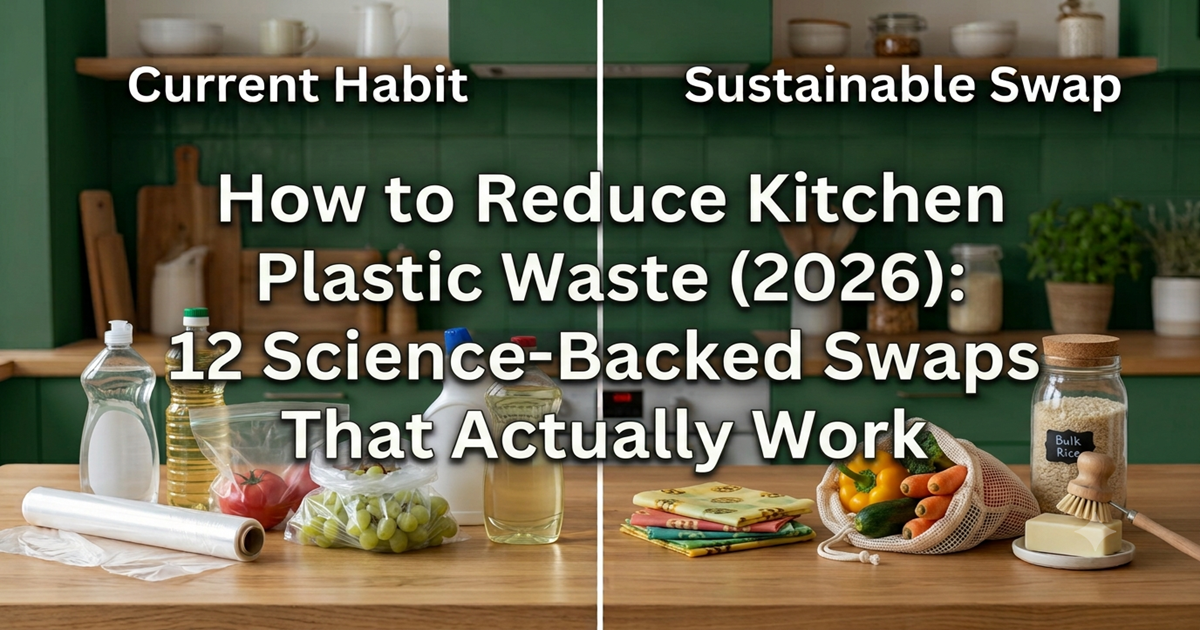
The most effective way to reduce kitchen plastic waste in 2026 is to tackle it by category — starting with the highest-volume items first: plastic wrap → beeswax wraps or silicone lids, zip-lock bags → reusable silicone bags, plastic bottles → glass or stainless steel, and plastic cleaning bottles → dissolvable tablet refills. These four swaps alone eliminate over 80% of the single-use plastic in the average kitchen.
The average household generates 40 lbs of plastic kitchen waste every year — plastic wrap, zip-lock bags, produce bags, water bottles, cleaning spray bottles, and food storage containers that get used once and sent to landfill, where most will remain for 450 years.
As an Environmental Scientist, I’ve spent the last three years systematically testing plastic-free kitchen alternatives — not just for environmental credentials, but for whether they actually perform well enough to make permanent household swaps. What follows are 12 swaps that passed both tests: genuinely effective and genuinely plastic-free.
🚚 Need Fast & Free Shipping on Your Kitchen Supplies?
Get fast, eco-friendly delivery and exclusive deals on top-rated sustainable tools with a 30-Day Amazon Prime Free Trial.
Try Amazon Prime Free for 30 Days →⚡ Quick Overview: 12 Best Kitchen Plastic Swaps (2026)
| Swap | Replace | With | Annual Savings | Difficulty |
|---|---|---|---|---|
| 1. Plastic wrap | Saran Wrap / cling film | Beeswax wraps | ~$30–50 | ⭐ Easy |
| 2. Zip-lock bags | Single-use sandwich bags | Reusable silicone bags | ~$60–80 | ⭐ Easy |
| 3. Produce bags | Plastic produce bags | Mesh cotton bags | ~$20–30 | ⭐ Easy |
| 4. Plastic food containers | Tupperware / takeout containers | Glass food storage | ~$50–70 | ⭐⭐ Moderate |
| 5. Cleaning spray bottles | Single-use spray bottles | Dissolvable tablet refills | ~$80–120 | ⭐ Easy |
| 6. Plastic water bottles | Single-use water bottles | Stainless steel / glass | ~$100–200 | ⭐ Easy |
| 7. Plastic dish soap bottle | Liquid dish soap plastic bottle | Dish soap bar / concentrate | ~$20–40 | ⭐ Easy |
| 8. Plastic straws | Single-use plastic straws | Stainless steel / glass straws | ~$10–20 | ⭐ Easy |
| 9. Plastic wrap for bowls | Covering bowls with plastic | Reusable silicone bowl covers | ~$15–25 | ⭐ Easy |
| 10. Plastic bin liners | Single-use bin/trash bags | Compostable trash bags | ~$20–35 | ⭐ Easy |
| 11. Plastic sponges | Synthetic dish sponges | Natural loofah / cellulose sponges | ~$15–25 | ⭐ Easy |
| 12. Plastic wrap for freezer | Plastic wrap / zip-lock freezer bags | Reusable freezer-safe glass containers | ~$30–50 | ⭐⭐ Moderate |
💰 How Much Does Switching to Plastic-Free Actually Save?
💰 Annual Spend: Single-Use Plastic vs Reusable Alternatives
The economics of going plastic-free are often misunderstood. The upfront cost of reusable alternatives feels high — a set of silicone bags or glass containers is more expensive than a box of zip-locks. But each reusable item replaces 50–200 disposable purchases over its lifespan. Over a two-year period, every swap on this list pays for itself and continues generating savings.
🧪 The 12 Swaps: Full Details and Best Products (2026)
Swap 1 Plastic Wrap → Beeswax Wraps
| Replace | Saran Wrap, cling film, single-use plastic wrap |
| Best Alternative | Beeswax wraps (Bee’s Wrap is the benchmark brand) |
| How It Works | Warmth of your hands molds the wrap around food or bowls — seals on contact |
| Lifespan | 1 year of regular use (100+ uses per wrap) |
| Cost | ~$18–22 for a 3-pack set vs ~$8–10/year for plastic wrap |
| Compostable? | ✅ Yes — 100% compostable at end of life |
Bee’s Wrap remains the gold standard for beeswax wraps in 2026 — certified by the Forest Stewardship Council, made with organic cotton, sustainably sourced beeswax, and tree resin. They work on any food except raw meat (keep a separate container for meat) and are washable in cold water with mild soap.
✅ Pros: Genuinely biodegradable and compostable, reusable 100+ times, effective seal on most foods, attractive alternative to plastic
❌ Cons: Not suitable for raw meat or hot food, require cold water washing, some users find the wax scent noticeable initially
🛒 Check Price on AmazonSwap 2 Zip-Lock Bags → Reusable Silicone Bags
| Replace | Single-use zip-lock sandwich, snack, and freezer bags |
| Best Alternative | Stasher Reusable Silicone Bags (industry benchmark) |
| Lifespan | 3,000+ uses — effectively permanent |
| Safe For | Freezer ✅ · Microwave ✅ · Dishwasher ✅ · Boiling water ✅ |
| Cost | ~$12–20 per bag vs ~$80/year in zip-locks for average household |
| Plastic Eliminated | ~500 zip-lock bags per Stasher bag over its lifespan |
Stasher bags are made from pure platinum food-grade silicone — no BPA, no BPS, no phthalates, and no fillers. They seal airtight, are safe across all temperature ranges (freezer to boiling water), and clean easily in the dishwasher. The initial investment of $12–20 per bag pays back within 6–8 months at average zip-lock usage rates.
✅ Pros: Extremely durable, safe for all temperatures including microwave and boiling, dishwasher safe, airtight seal, leakproof
❌ Cons: Higher upfront cost, silicone can stain with strong-colored foods like turmeric, bulkier to store than flat zip-locks
🛒 Check Price on AmazonSwap 3 Plastic Produce Bags → Reusable Mesh Bags
| Replace | Thin plastic bags on the produce aisle roll |
| Best Alternative | Organic cotton or recycled nylon mesh bags |
| Lifespan | 5+ years with regular washing |
| Cost | ~$12–18 for a 5-pack set |
| Washable? | ✅ Machine washable — cold, gentle cycle |
| Works For | Fruits, vegetables, bulk grains, nuts, bread rolls |
The plastic bag on the produce aisle roll is one of the most unnecessary single-use plastics in the kitchen — it’s used for 10 minutes at the grocery store, then discarded. Reusable mesh bags weigh practically nothing, stuff into any bag or pocket, and can be used for thousands of shopping trips.
🛒 Check Price on AmazonSwap 4 Plastic Food Containers → Glass Food Storage
| Replace | Plastic Tupperware, takeout containers, plastic meal prep containers |
| Best Alternative | Borosilicate glass containers with BPA-free lids |
| Best Brand | Pyrex, OXO Good Grips Glass, Glasslock |
| Safe For | Oven ✅ · Microwave ✅ · Freezer ✅ · Dishwasher ✅ |
| Lifespan | 10–20+ years |
| Key Benefit | No plastic leaching into food — especially when heated |
The health case for glass over plastic food storage is increasingly supported by science. Plastic food containers — even BPA-free alternatives — have been shown to leach plastic chemical additives into food when heated, scratched, or used repeatedly. Glass is chemically inert: no leaching under any conditions.
✅ Pros: No plastic leaching, oven and microwave safe, lasts 10–20+ years, no staining or odor absorption, better food visibility
❌ Cons: Heavier than plastic, breakable, more expensive upfront, can’t use metal utensils to cut inside
🛒 Check Price on AmazonSwap 5 Cleaning Spray Bottles → Dissolvable Tablet Refills
| Replace | Single-use plastic cleaning spray bottles (Method, Mrs. Meyer’s, etc.) |
| Best Alternative | Dissolvable cleaning tablets + reusable glass or aluminum spray bottle |
| Best Brands | Blueland, Grove Co. Concentrated Refills, Meliora |
| Plastic Eliminated | 6–8 plastic bottles per year per product type |
| Cost Per Refill | ~$2–4 per tablet vs ~$4–8 per cleaning bottle |
| Certifications | Blueland: Leaping Bunny certified, plastic-free packaging ✅ |
Blueland’s cleaning tablets are the benchmark product in this category. Drop one tablet into a reusable glass bottle, add water, and you have a full bottle of certified non-toxic multi-surface cleaner. The tablet packaging is a small cardboard sleeve — genuinely plastic-free. Cleaning performance is comparable to conventional spray products for everyday kitchen surfaces.
✅ Pros: Eliminates 6–8 plastic bottles per year per product, genuinely effective, cheaper per use than buying new bottles, certified non-toxic formulas
❌ Cons: Upfront cost of glass spray bottle, tablets require 5–10 minutes to fully dissolve, some strong grease-cutting tasks still require more concentrated cleaners
🛒 Check Price on AmazonSwap 6 Plastic Water Bottles → Stainless Steel or Glass
| Replace | Single-use plastic water bottles |
| Best Alternative | Stainless steel insulated bottle (Hydro Flask, Stanley) or glass (Lifefactory) |
| Annual Bottles Eliminated | ~365–730 single-use bottles (1–2/day habit) |
| Annual Savings | ~$150–250 at $0.50–1.00/bottle average |
| Lifespan | 10–15 years for quality stainless steel |
| Microplastics Risk | Single-use bottles: ✅ Present · Stainless/Glass: ❌ Zero |
A 2024 study found that a single liter of water from a plastic bottle contains an average of 240,000 plastic particles — 90% of them nanoplastics too small to see. Stainless steel and glass bottles contain zero microplastics.
✅ Pros: Largest annual savings, eliminates hundreds of bottles per year, stainless steel keeps drinks cold 24 hours, no microplastic exposure
❌ Cons: Requires remembering to bring the bottle, upfront cost of $25–50, glass bottles are breakable
🛒 Check Price on AmazonSwap 7 Plastic Dish Soap Bottle → Dish Soap Bar or Concentrate
| Replace | Plastic dish soap bottles (Dawn, Fairy, etc.) |
| Best Alternative | Solid dish soap bar (Meliora, No Tox Life) or concentrate refill pouches |
| Bottles Eliminated | 6–12 plastic bottles per year for average household |
| Performance | Solid bars: comparable to liquid for everyday dish washing |
| Certifications | Meliora: Certified B Corp ✅ · Zero plastic packaging ✅ |
| Cost | ~$7–10 per bar lasting 2–3 months |
No Tox Life dish block is the benchmark solid dish soap — zero plastic packaging, vegan, palm-oil-free, and concentrated enough that one bar lasts a family of four 2–3 months. Works best with a dish brush (not a sponge) for effective lathering.
Swap 8 Plastic Straws → Stainless Steel or Glass Straws
Reusable stainless steel straws cost ~$8–12 for a set of 8 and last indefinitely. A dishwasher-safe cleaning brush comes included with most sets. For households using plastic straws daily, a set of 8 stainless straws replaces approximately 2,920 single-use straws over a 10-year lifespan. Glass straws (Hummingbird) are the premium option for those who prefer to see through the straw.
🛒 Check Price on AmazonSwap 9 Plastic Wrap Over Bowls → Silicone Bowl Covers
Reusable silicone stretch lids fit over any bowl, plate, pot, or can — creating an airtight seal without any single-use plastic. A 6-piece set covering sizes from 2.5″ to 9.5″ costs ~$12–18 and handles every bowl size in a standard kitchen. Dishwasher, microwave, and freezer safe.
🛒 Check Price on AmazonSwap 10 Plastic Bin Liners → Certified Compostable Trash Bags
Standard plastic bin liners are unnecessary in kitchens with a compost bin for food scraps — the main source of odor and mess that makes bin liners feel necessary. For general dry waste, certified compostable trash bags (BioBag, If You Care) break down in 90–180 days in industrial composting vs 450 years for standard plastic bags.
Swap 11 Synthetic Sponges → Natural Loofah or Cellulose Sponges
Standard kitchen sponges are made from polyurethane foam — a petroleum-derived plastic that sheds microplastics into dishwater with every use. Natural loofah sponges (grown from the luffa plant) and cellulose sponges made from plant fiber are both biodegradable, compostable, and comparable in cleaning performance for everyday dishes. If You Care Cellulose Sponges are the benchmark — FSC certified, no synthetic dyes, compostable.
🛒 Check Price on AmazonSwap 12 Plastic Freezer Wrap → Freezer-Safe Glass Containers
Plastic wrap and zip-lock bags used for freezer storage are avoidable — wide-mouth mason jars, Pyrex glass containers, and stainless steel containers all work in the freezer with proper headspace left for expansion. Leave 1 inch of headspace for liquids and soups; freeze without lids first for wet foods, then lid once frozen solid. A set of 6 wide-mouth pint mason jars (~$12) replaces an entire box of freezer bags for most households.
🛒 Check Price on Amazon🗺️ Where to Start: A 4-Week Kitchen Plastic Detox Plan
| Week | Focus | Swaps to Make | Upfront Cost |
|---|---|---|---|
| Week 1 | Daily-use items | Water bottle + reusable produce bags + stainless straws | ~$30–50 |
| Week 2 | Food storage | Stasher bags (3-pack) + beeswax wraps + silicone bowl covers | ~$50–70 |
| Week 3 | Cleaning products | Dissolvable cleaning tablets + dish soap bar + natural sponges | ~$30–50 |
| Week 4 | Long-term storage | Glass food containers (starter set) + compostable trash bags | ~$40–80 |
🔬 The Honest Truth: Which Plastic Waste Actually Matters Most?
Not all kitchen plastic waste has equal environmental impact. Here is where your effort matters most, ranked by environmental significance:
| Plastic Item | Annual Volume | Recyclable? | Environmental Priority |
|---|---|---|---|
| Single-use water bottles | High (daily habit) | ⚠️ Often not recycled | 🔴 Highest — eliminate first |
| Cleaning spray bottles | 6–12/year | ⚠️ Rarely recycled (multi-layer) | 🔴 High — most go to landfill |
| Zip-lock / freezer bags | High (weekly) | ❌ Not curbside recyclable | 🔴 High — flexible plastic not recycled |
| Plastic wrap / cling film | Moderate | ❌ Not recyclable | 🟠 Moderate-high — always landfill |
| Plastic food containers | Low-moderate | ⚠️ Sometimes (check number) | 🟠 Moderate — focus on avoiding new purchases |
| Plastic straws | Low-moderate | ❌ Not recyclable | 🟡 Lower — but ocean impact is disproportionate |
Frequently Asked Questions
Q: What is the single most impactful swap to reduce kitchen plastic waste?
For most households, eliminating single-use water bottles is the highest-volume, highest-impact single swap — potentially eliminating 365–730 plastic bottles per person per year. The second most impactful is switching cleaning spray bottles to dissolvable tablet refills, which eliminates 6–12 hard-to-recycle plastic bottles per product category annually.
Q: Are beeswax wraps actually better for the environment than plastic wrap?
Yes — significantly. Beeswax wraps are made from organic cotton, sustainably sourced beeswax, tree resin, and jojoba oil — all biodegradable. At end of life, they compost fully in a home compost bin. Plastic wrap is made from low-density polyethylene (LDPE), is not curbside recyclable, and persists in landfill for 450+ years. The manufacturing footprint of beeswax wraps is offset within the first 10–15 uses compared to disposable plastic.
Q: Are silicone products actually eco-friendly?
Silicone is a nuanced case. It is not biodegradable — it does not break down in landfill. However, it is far more durable than plastic (3,000+ uses vs 1 use) and does not leach chemicals into food. From a lifecycle analysis perspective, a silicone bag that replaces 500 plastic zip-lock bags has a dramatically lower overall environmental impact despite not being biodegradable itself. The key is buying quality silicone items that will genuinely last 10+ years and actually using them consistently.
Q: How do you reduce plastic waste when buying groceries?
Bring reusable produce bags and a reusable shopping bag. Choose products in glass, cardboard, or aluminum packaging over plastic when available — especially for items used frequently (olive oil in glass vs plastic, canned tomatoes over plastic pouches, block cheese over pre-shredded in plastic bags). Buy in bulk using your own containers at bulk stores where available. These three habits eliminate the largest volume of grocery plastic for most households.
Q: Is it worth switching to compostable trash bags?
Yes and no — it depends on your waste management situation. Certified compostable bags (ASTM D6400 or EN 13432 certified) only break down in industrial composting facilities, not in home composts or landfills. If your municipality has industrial composting for food scraps, compostable bags are a meaningful upgrade. If your compostable bags will end up in a standard landfill, the benefit is minimal — the priority should be reducing the volume of food waste sent to landfill via a home compost bin instead.
Q: How long does it take for kitchen plastic waste reduction swaps to pay for themselves?
Most swaps pay back within 6–18 months at average usage rates. Stainless steel straws pay back in weeks. Silicone zip-lock bags pay back in 6–8 months at typical usage. A glass water bottle pays back in under 3 months for a daily bottled water habit. Glass food containers take the longest — 18–24 months — but last 10–20 years, generating decades of ongoing savings.
🏆 Summary: Where to Start Reducing Kitchen Plastic Waste (2026)
| If your priority is… | Start with… |
|---|---|
| Biggest volume reduction, fast | ✅ Reusable water bottle + silicone bags |
| Biggest annual money savings | ✅ Reusable water bottle + cleaning tablets |
| Easiest first swap | ✅ Reusable produce bags + beeswax wraps |
| Best for food safety (no leaching) | ✅ Glass food storage containers |
| Cleaning product plastic | ✅ Dissolvable tablet refills (Blueland) |
| Complete kitchen overhaul | ✅ Follow the 4-week detox plan above |
Related Articles
- Best Laundry Detergent Sheets (2026) — 6 Brands Tested by an Environmental Scientist
- Best Dissolvable Cleaning Tablets (2026) — Plastic-Free Kitchen Cleaning
- Best Glass Food Storage Containers (2026) — 7 Sets Tested
- Best Eco-Friendly Dish Soap (2026) — 5 Biodegradable Brands Tested
- Best Compostable Trash Bags (2026) — 6 Certified Brands Tested
- Plastic Free July 2026: Complete 31-Day Kitchen Challenge Guide
Affiliate Disclaimer: This post contains Amazon affiliate links. If you purchase through these links, I earn a small commission at no extra cost to you. I only recommend products I have personally researched and believe in. This post was not sponsored by any brand mentioned.