
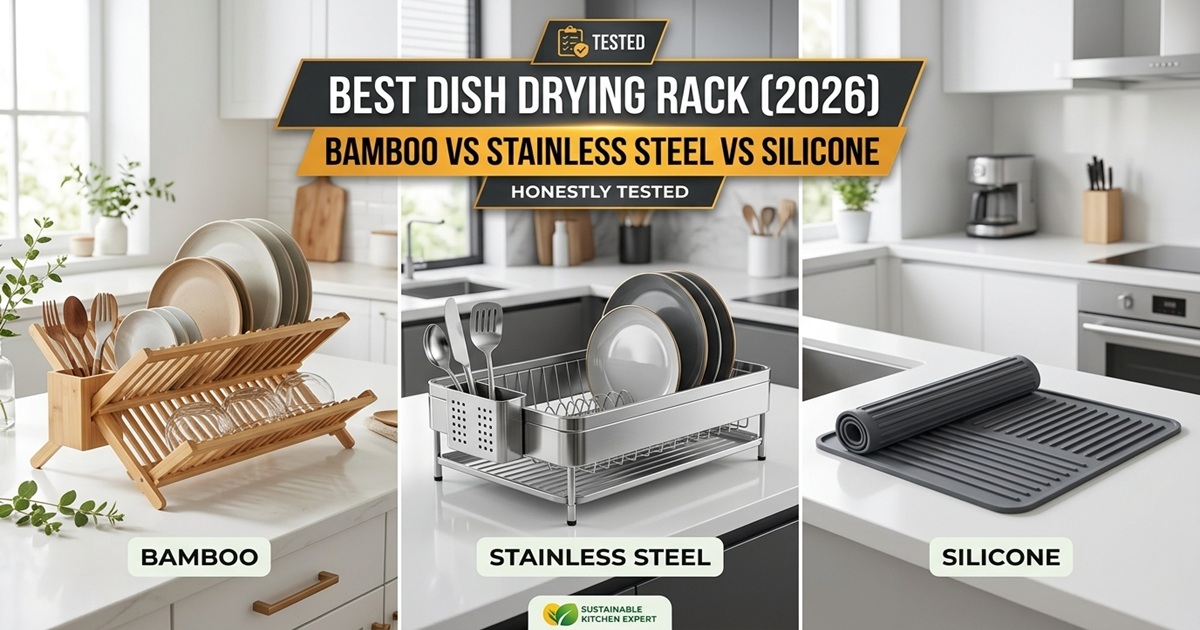
The best dish drying rack material in 2026 depends on how you use it. Stainless steel is the safest long-term default for most kitchens — it resists rust better than coated steel, holds up to daily cast iron and heavy pots without bending, and reliably lasts 5+ years. Bamboo is the most eco-friendly and visually warm option, but requires being fully dried after every use — left wet, it will mold or warp within 1-2 years. Silicone is the most hygienic and heat-resistant choice (up to 450°F) and works best as a counter mat, though it redirects water rather than absorbing it, so the counter underneath still needs wiping.
A dish drying rack solves a problem towels and cabinets can’t: it lets water drain away from a dish instead of pooling under it — the difference between something drying in twenty minutes and something staying damp, and starting to smell, for hours. But the material you choose determines whether that rack still looks and functions well in five years, or whether you’re replacing it annually.
As an Environmental Scientist who has tested drying racks alongside Swedish dishcloths and bamboo dish brushes in my own zero-waste kitchen setup, this guide covers the honest tradeoffs of each material — including the mold risk with bamboo that most product pages don’t mention.
🚚 Need Fast & Free Shipping on Your Kitchen Supplies?
Get fast, eco-friendly delivery and exclusive deals on top-rated sustainable tools with a 30-Day Amazon Prime Free Trial.
Try Amazon Prime Free for 30 Days →Dish racks, cloths, brushes, and high-ticket picks — all curated in one place
🔬 Material Comparison: What Actually Matters
| Material | Durability | Mold/Rust Risk | Dishwasher Safe | Best For |
|---|---|---|---|---|
| Stainless Steel | 5+ years ✅ | Low (if kept clean) | ✅ Usually top-rack safe | Heavy daily use, pots, cast iron |
| Bamboo | 1-2 years ⚠️ | High if left wet | ❌ Never — warps/cracks | Light use, aesthetic priority |
| Silicone | 2-3 years | Very low | ✅ Yes | Over-sink mats, heat resistance |
| Coated Wire/Plastic | Under 1 year ❌ | High (coating chips, rust spreads) | Varies | Budget/temporary use only |
🥇 Best Overall: Stainless Steel Racks
Best for Daily Use Stainless Steel Dish Drying Rack
| Material | Solid stainless steel (not coated wire) |
| Rust Resistance | ✅ High — resists rust far better than coated alternatives |
| Weight Capacity | Look for 80+ lbs rating if you dry Dutch ovens or cast iron |
| Dishwasher Safe | ✅ Most are top-rack safe |
| Realistic Lifespan | 5+ years with basic wipe-down maintenance |
| Price Range | ~$30-120 depending on size and brand |
🌿 Most Eco-Friendly Look: Bamboo Racks
Best Aesthetic Bamboo Dish Drying Rack with Utensil Holder
| Material | Sustainably sourced bamboo |
| Mold Risk | ⚠️ High if left wet — must be dried thoroughly after every use |
| Antimicrobial Properties | Naturally somewhat antimicrobial, but not immune to mold |
| Dishwasher Safe | ❌ Never — heat and water pressure warp or crack the wood |
| Realistic Lifespan | 1-2 years with proper drying care |
| Price Range | ~$20-40 |
💧 Best for Mats: Silicone Options
Most Hygienic Silicone Drying Mat
| Material | Food-grade silicone |
| Heat Resistance | ✅ Up to 450°F — can handle hot pans directly |
| Water Handling | Redirects water rather than absorbing it — counter still needs wiping after heavy loads |
| Dishwasher Safe | ✅ Yes |
| Realistic Lifespan | 2-3 years |
| Price Range | ~$15-35 |
🎯 Which Material Fits Your Kitchen?
| Your Situation | Best Choice | Why |
|---|---|---|
| Hand-wash daily, heavy pots | ✅ Stainless Steel | Only material rated for sustained heavy loads |
| Small household, light use | ✅ Bamboo | Aesthetic priority, manageable maintenance at low volume |
| Want to skip a trivet | ✅ Silicone Mat | Only option safe for direct hot pan contact |
| Humid climate/kitchen | ✅ Stainless Steel | Bamboo mold risk much higher in humidity |
| Dishwasher-heavy household | ✅ Stainless Steel or Silicone | Both can go in dishwasher; bamboo cannot |
| Deep sink or small counter | ✅ Over-sink stainless or roll-up silicone | Saves counter space |
Frequently Asked Questions
Q: Are bamboo dish racks sanitary?
Yes, as long as they’re allowed to fully dry between uses. Bamboo is naturally somewhat antimicrobial, but it is not immune to mold — the risk comes specifically from moisture sitting in the wood grain. A bamboo rack that’s towel-dried and air-ventilated after each use stays sanitary; one that’s left damp in a closed, humid space will develop mold within weeks, not months.
Q: What weight capacity do I need for a dish drying rack?
Match the capacity to your heaviest regular item. A rack rated for 80+ lbs typically has a reinforced internal frame that handles cast iron pans and Dutch ovens without bowing. Lower-capacity racks (30-44 lbs) are fine for everyday plates, bowls, and glasses but may bend under a stack of heavy pots. If you regularly hand-wash a Dutch oven alongside a skillet, prioritize the 80+ lbs category specifically.
Q: Can stainless steel dish racks rust?
High-quality stainless steel resists rust significantly better than coated alternatives, but it isn’t completely immune. If the protective surface gets scratched, or if harsh abrasive chemicals are used repeatedly, rust can eventually form at those damage points. The practical solution is simple: wipe the rack down regularly and avoid steel wool or harsh scouring pads directly on the surface. With this basic care, genuine stainless steel racks commonly last 5+ years without any rust issues.
Q: Dish rack or dish drying mat — which is better?
They solve slightly different problems. A rack elevates dishes so water drains away completely, which works best for larger loads or households that hand-wash frequently. A mat sits flat and absorbs (or in silicone’s case, redirects) water — better suited for smaller kitchens or households that mostly dry a few items at a time. Many households use both: a rack for the bulk of daily dishes, and a mat underneath or beside it to catch drips and protect the counter.
🏆 Final Verdict: Best Dish Drying Rack Material in 2026
Curated stainless, bamboo, and silicone picks in one place
Related Articles
- Swedish Dishcloth Review (2026): Which Brand Actually Replaces Paper Towels?
- Bamboo Dish Brush Review (2026): Is It Better Than Plastic?
- Best Dissolvable Cleaning Tablets (2026)
- How to Reduce Kitchen Plastic Waste (2026): 12 Science-Backed Swaps
- Best Glass Food Storage Containers (2026)
Affiliate Disclaimer: This post contains Amazon affiliate links. If you purchase through these links, I earn a small commission at no extra cost to you. I only recommend products I have personally researched and believe in. This post was not sponsored by any brand mentioned.