
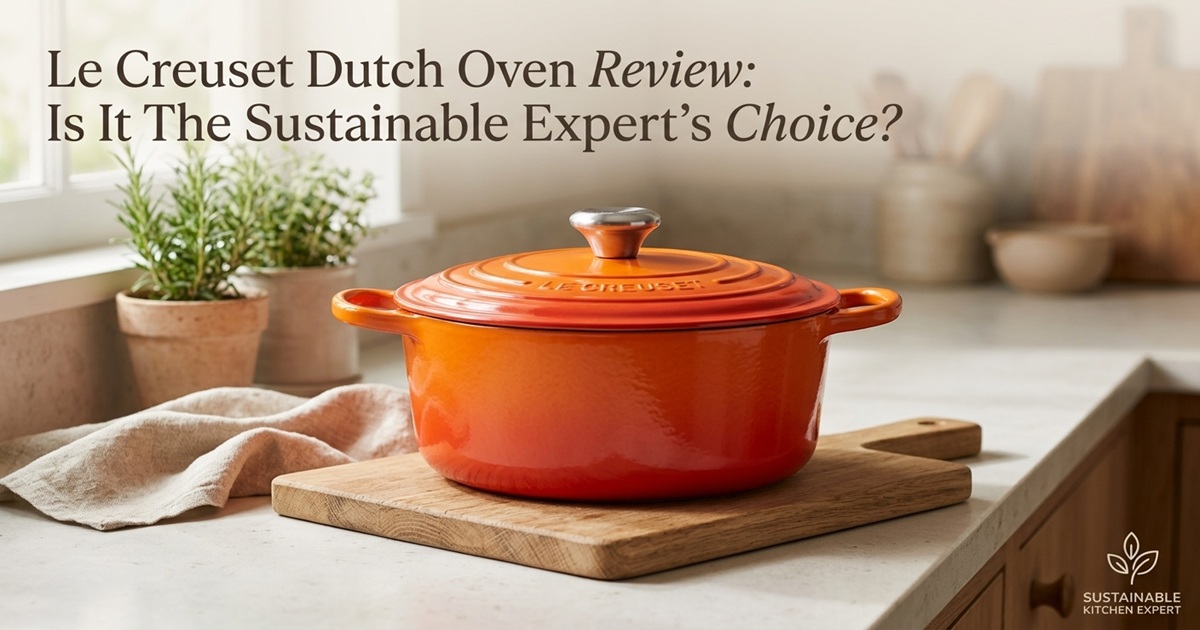
Le Creuset Dutch Oven Review (2026)
Tested against Staub, Lodge & Made In — is the $380 price tag actually justified, or is this French icon just clever marketing?
Curated picks from an Environmental Scientist — every color, every size, side by side
The Le Creuset Dutch Oven is worth $380 in 2026 for households that cook braises, stews, and bread regularly — independent testing confirms it is the lightest enameled cast iron on the market (12 lbs at 6.75-quart, versus Staub’s 16 lbs) and its light-colored sand interior makes monitoring fond and browning significantly easier than competitors. With a lifetime warranty and a documented 20-30 year lifespan among BuyItForLife owners, it costs roughly $13-19 per year of ownership. The honest caveat: Lodge’s enameled cast iron delivers comparable braising performance for one-sixth the price — the premium here buys weight, color selection, and resale value, not fundamentally different cooking results.
🚚 Need Fast & Free Shipping on Your Kitchen Supplies?
Get fast, eco-friendly delivery and exclusive deals on top-rated sustainable tools with a 30-Day Amazon Prime Free Trial.
Try Amazon Prime Free for 30 Days →Every Dutch oven “review” online falls into one of two camps: uncritical Le Creuset fandom, or budget-brand advocacy that dismisses the premium price without testing the actual performance difference. Neither is useful if you’re deciding whether to spend $380 on cookware. As an Environmental Scientist, I approached this differently — comparing Le Creuset directly against Staub, Lodge, and Made In on measurable criteria: weight, heat retention, moisture retention during cooking, and realistic lifespan.
The short version: Le Creuset’s reputation is earned, not manufactured. But “worth it” depends entirely on what you’re optimizing for — and this review breaks down exactly when the premium price makes sense and when it doesn’t.
🥇 Head-to-Head: Le Creuset vs the Field
🔬 The Interior Enamel Difference — Why It Actually Matters
This is the detail most reviews skip past, and it’s the single biggest functional difference between Le Creuset and Staub. Le Creuset uses a light-colored sand interior enamel across its entire Dutch oven line. Staub uses a dark, matte black interior.
The practical impact: when you’re searing meat and building fond (the browned bits on the bottom of the pan that become the base of a sauce), a light interior lets you actually see that browning develop in real time. On Staub’s dark interior, you’re cooking partially blind — guessing when the fond has developed enough to deglaze. For bread bakers specifically, this same light interior makes it far easier to judge crust color through the cooking process.
🌱 The Eco Case: Buy Once, Cook for 30 Years
Side-by-side gallery — Cerise, Marseille, Flame, and every shade in between
📊 Full Testing Data: Heat & Moisture Retention
| Brand | Weight (similar size) | Cooling Test Result | Interior Color | Verdict |
|---|---|---|---|---|
| Le Creuset | 12 lbs (lightest) | Strong retention | Light sand | Best all-around |
| Staub | 16 lbs | 182°F (best retention) | Dark matte | Best for long braises |
| Made In | Mid-weight | 177°F | Light | Strong budget-premium option |
| Tramontina | Heavy | 131°F (weakest) | Dark | Budget pick — QC concerns |
| Lodge | Heavy | Comparable to premium | Light | Best value overall |
Which Size Should You Buy?
The 5.5-quart is the size most home cooks should buy first — it comfortably serves four to six people, making it practical for both weeknight two-person meals and family dinners, without being so large it becomes awkward to store or lift. Testers who cooked with the same 5.5-quart Cerise pot for three-plus years reported it remaining their default choice for everything from beef bourguignon to sourdough bread.
If you regularly cook for six-plus people or want a single pot that doubles as a serving vessel for gatherings, size up to the 7.25 or 7.5-quart — this is the size most professional test kitchens select as their benchmark, recommended for seven to eight servings.
✅ What Le Creuset Gets Right
Lightest enameled cast iron tested · Light interior for visible browning · 27 color options · Lifetime warranty · 20-30 year documented lifespan · Zero PFAS/PTFE coating
❌ Honest Limitations
~6x more expensive than Lodge · Staub retains heat slightly better for long braises · Heavy upfront cost for first-time buyers · Hand-washing recommended despite “dishwasher safe” rating
🆚 Le Creuset vs Staub: The Real Decision
If your cooking is dominated by long, slow braises — pot roasts, osso buco, multi-hour stews — Staub’s superior heat retention (182°F vs Le Creuset’s slightly lower result) gives it a measurable edge. But for the broader range of everyday cooking — searing, sautéing, bread baking, shorter braises — Le Creuset’s lighter weight and visible-browning interior make it the more practical daily driver. This is why Le Creuset remains the default recommendation for most home cooks, while serious braise-focused cooks often keep both.
Both brands, all sizes, current pricing — updated regularly
Frequently Asked Questions
Q: Is Le Creuset worth the price compared to Lodge?
It depends on your priorities. Lodge delivers genuinely comparable braising performance at roughly one-sixth the price — for pure cooking function, Lodge is the value winner. Le Creuset’s premium buys three things Lodge doesn’t offer: significantly lighter weight (easier daily handling), a much wider color selection (27 vs a handful), and stronger resale/heirloom value. If budget is the primary constraint, Lodge is the honest recommendation. If you’ll use the pot daily for decades and want it to be enjoyable to lift and beautiful to display, Le Creuset’s premium is justified.
Q: How long does a Le Creuset Dutch oven actually last?
Based on community data from BuyItForLife and similar long-term ownership forums, 20-30+ years of regular use is common, with many owners reporting pots still performing well after being passed down a generation. The backing lifetime warranty reflects genuine manufacturer confidence — the enameled cast iron construction has no moving parts, no coating that wears off in the way non-stick does, and cast iron itself is essentially indestructible under normal use.
Q: What size Le Creuset Dutch oven should I buy first?
The 5.5-quart size is the standard recommendation for most households — it serves 4-6 people comfortably and handles the widest range of recipes without being unwieldy to lift or store. Only size up to 7.25-7.5 quarts if you regularly cook for larger groups or specifically want a piece that doubles as a serving vessel at the table.
Q: Is Le Creuset actually eco-friendly cookware?
Relative to non-stick alternatives, yes — meaningfully so. Le Creuset’s enamel coating contains no PTFE or PFAS (“forever chemicals”), unlike conventional non-stick pans, and there’s no coating degradation to worry about over the pot’s lifespan. The bigger environmental case is longevity: a pot that reliably lasts 20-30 years replaces roughly 8-10 non-stick pans (typical 2-3 year lifespan each) over the same period — avoiding the manufacturing and shipping footprint of each replacement.
🏆 Final Verdict
Buy the Le Creuset 5.5-quart if you want the lightest, most versatile enameled cast iron available and plan to use it several times a week for 20+ years — the light interior alone makes it easier to cook well, and the lifetime warranty means this is very likely the last Dutch oven you’ll need to purchase. If budget is the deciding factor and you’re comfortable with a heavier pot, Lodge delivers real value at a fraction of the price. Skip Tramontina regardless of price — the heat retention and quality control data don’t support the savings.
Related Articles
- Best Non-Toxic Cookware Sets (2026): 7 PFAS-Free Options Tested
- Vitamix Blender Review (2026): Is It Worth $350?
- 45 Best Eco-Friendly Gifts (2026): Sustainable Picks for Every Budget
Affiliate Disclaimer: This post contains Amazon affiliate links. If you purchase through these links, I earn a small commission at no extra cost to you. I only recommend products I have personally researched and believe in. This post was not sponsored by Le Creuset, Staub, Lodge, or any brand mentioned. Testing data referenced from independent third-party cookware reviews (Prudent Reviews, EverythingKitchens, 2026).