
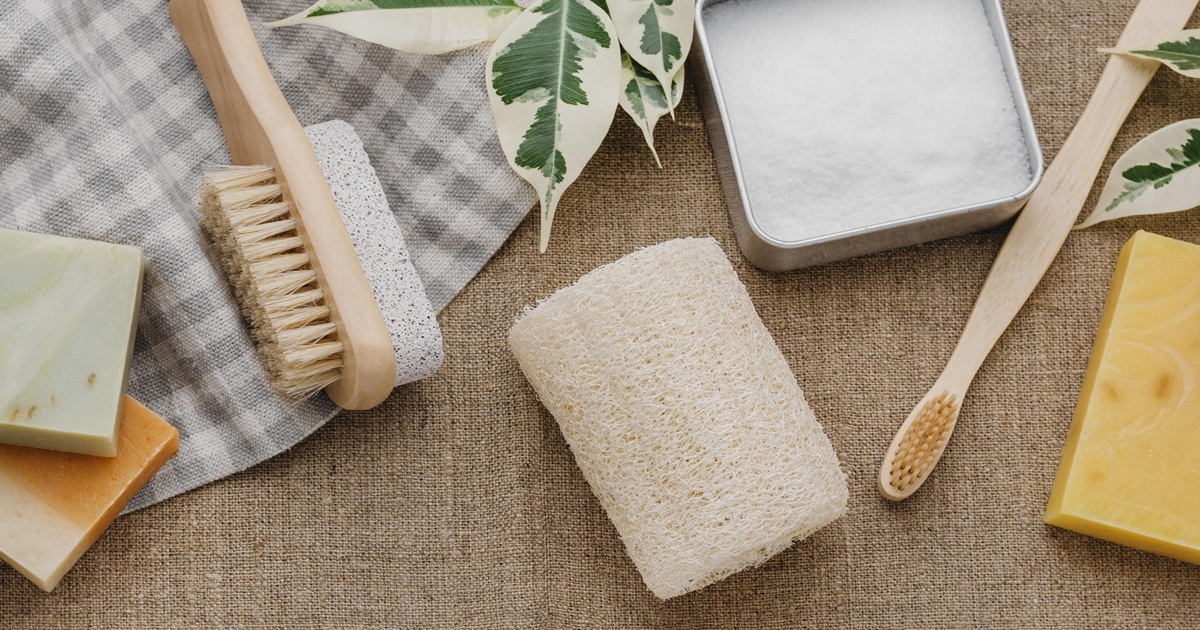
Your kitchen sponge might be the most overlooked source of plastic pollution in your home. Every time you scrub a plate, that conventional foam sponge sheds invisible plastic fragments straight into your food, your drain, and ultimately your body. As an Environmental Scientist, I’ve tested the best natural kitchen sponges available in 2026 — and the results may change the way you think about dishwashing forever.
🏆 Quick Picks: Best Natural Kitchen Sponges
| Pick | Best For | Product | Action |
|---|---|---|---|
| 🥇 Best Overall | Everyday use | AIRNEX Natural Cellulose & Coconut Sponge | 🛒 Amazon |
| 🌿 Best Loofah | Heavy scrubbing | YeahWhee Natural Loofah Cellulose Sponge | 🛒 Amazon |
| 🌊 Most Natural | Gentle/delicate | Natural Sea Sponge | 🛒 Amazon |
| 💰 Best Value | Budget pick | KMAKII Natural Loofah Sponge | 🛒 Amazon |
| 🧼 Best Unbleached | Chemical-free | ENEY Natural Unbleached Sponge | 🛒 Amazon |
Why Your Kitchen Sponge Is a Bigger Problem Than You Think
Most people switch to reusable bags, bamboo brushes, and compostable trash bags — and then leave a plastic sponge sitting right next to the sink without a second thought. Here is the science-backed truth about conventional sponges:
They shed microplastics constantly. Conventional sponges are made from polyurethane foam — a type of plastic. A 2022 study published in Science of the Total Environment confirmed that kitchen sponges release microplastics and nanoplastics during everyday use. The scrubber side, being harder, sheds the most particles. These particles travel directly from your sponge onto your dishes, into your water, and eventually into your body.
🚚 Need Fast & Free Shipping on Your Kitchen Supplies?
Get fast, eco-friendly delivery and exclusive deals on top-rated sustainable tools with a 30-Day Amazon Prime Free Trial.
Try Amazon Prime Free for 30 Days →They are the germiest item in your kitchen. Because sponges are breeding grounds for bacteria including Salmonella and Campylobacter, scientists suggest replacing them every single week. For the average household, that means 52 sponges tossed into landfill every year — where they take over 200 years to decompose.
They contain hidden chemicals. Many conventional sponges are treated with triclosan — an antimicrobial pesticide linked to hormone disruption and higher cancer risks — to mask odors. These chemicals leach onto your dishes every time you wash them.
What Makes a Sponge Truly “Natural”?
Not every sponge marketed as “eco-friendly” or “green” is genuinely natural. Here is what to look for:
| Term | What It Means | What to Look For |
|---|---|---|
| Natural | Made from plant-based or marine materials | Cellulose, loofah, coconut fiber, sea sponge |
| Biodegradable | Breaks down naturally | Confirm no synthetic binders or dyes |
| Compostable | Safe for home or industrial compost | Look for compostable certification |
| Unbleached | No chemical whitening agents | Natural brown/beige color |
| Plastic-free | No polyurethane or polyester components | Check both soft side and scrubber side |
Types of Natural Sponge Materials — Compared
| Material | Source | Best For | Lifespan | Compostable | Scrubbing |
|---|---|---|---|---|---|
| Cellulose | Wood pulp | Everyday dishes | 4–6 weeks | ✅ Yes | ⭐⭐⭐ |
| Loofah | Dried gourd plant | Heavy scrubbing | 3–4 weeks | ✅ Yes | ⭐⭐⭐⭐⭐ |
| Coconut fiber | Coconut husk | Pots, cast iron | 4–6 weeks | ✅ Yes | ⭐⭐⭐⭐ |
| Sea sponge | Marine animal | Delicate/glassware | 3–6 months | ✅ Yes | ⭐⭐ |
| Cellulose + Loofah | Wood pulp + plant | All-purpose | 4–5 weeks | ✅ Yes | ⭐⭐⭐⭐ |
Top 5 Natural Kitchen Sponges Reviewed (2026)
1. AIRNEX Natural Kitchen Sponge — Best Overall
| Material | Biodegradable white cellulose + coconut fiber scrubber |
| Certifications | Biodegradable, compostable ✅ |
| Pack Size | 12-pack |
| Shape | Unique S-shape ergonomic design |
| Scrubbing Power | ⭐⭐⭐⭐ — effective without scratching |
| Drying Speed | ⭐⭐⭐⭐⭐ — fast-drying porous structure |
| Price | ~$12–15 per pack |
AIRNEX makes one of the most complete natural kitchen sponges on the market. The soft side is made from 100% plant-based white cellulose — the same material used in Swedish dishcloths — while the scrubber side uses natural coconut fiber for effective grease removal without scratching non-stick cookware, glass, or stainless steel.
What sets AIRNEX apart is its ergonomic S-shape design, which makes it noticeably more comfortable to hold during long dishwashing sessions. The porous cellulose structure dries significantly faster than conventional foam sponges, which means fewer bacteria breeding in your sink. At the end of its life, separate the two halves: compost the white cellulose side, and dispose of the coconut scrubber responsibly.
✅ Pros:
- 100% plant-based — cellulose + coconut fiber
- S-shape ergonomic design reduces hand strain
- Fast-drying = fewer bacteria
- Non-scratch — safe on all surfaces including non-stick
- Plastic-free packaging with tree-planting initiative
❌ Cons:
- Coconut scrubber side not fully compostable — must dispose of separately
- Not suitable for very heavy-duty cast iron cleaning
2. YeahWhee Natural Loofah Cellulose Sponge — Best for Heavy Scrubbing
| Material | Premium loofah (4 layers) + cellulose |
| Certifications | Biodegradable, compostable ✅ |
| Pack Size | 4-pack or 10-pack |
| Shape | Rectangular dual-sided |
| Scrubbing Power | ⭐⭐⭐⭐⭐ — powerful loofah fiber |
| Drying Speed | ⭐⭐⭐⭐ — good |
| Price | ~$10–14 per pack |
YeahWhee uses a premium multi-layer loofah construction — 4 layers of natural loofah stitched firmly together with cellulose — which gives it noticeably more scrubbing power than most natural sponges. This makes it ideal for baked-on food, greasy pots, and stubborn residue that a softer cellulose sponge would struggle with.
The loofah fiber is coarser than cellulose but still non-scratch on most kitchen surfaces. Important note: soak the sponge briefly in water before first use to soften the fibers — dry loofah can feel rough until it absorbs moisture.
✅ Pros:
- Powerful scrubbing — 4-layer loofah construction
- 100% biodegradable and compostable
- No microplastic shedding
- Dishwasher safe — extends lifespan
- Great value in 10-pack
❌ Cons:
- Must soak before first use
- Shorter lifespan than sea sponge (3–4 weeks)
- Can feel rough until fully moistened
3. Natural Sea Sponge — Most Natural Option
| Material | 100% natural marine sea sponge |
| Certifications | 100% natural, biodegradable ✅ |
| Pack Size | Individual or 2-pack |
| Shape | Natural irregular shape |
| Scrubbing Power | ⭐⭐ — gentle only |
| Drying Speed | ⭐⭐⭐⭐⭐ — excellent |
| Price | ~$10–18 each |
Natural sea sponges are the oldest cleaning tool known to humans — used for over 2,000 years. They are harvested from sustainable marine farms, are 100% free from synthetic additives, dyes, and toxins, and are hypoallergenic. In terms of pure naturalness, nothing beats a real sea sponge.
Sea sponges excel at gentle cleaning — delicate glassware, non-stick pans, and ceramic dishes — where you need absorbency without any abrasion. They absorb water exceptionally well and dry faster than any synthetic sponge, making them one of the least bacteria-prone options available.
✅ Pros:
- 100% natural — no synthetic materials whatsoever
- Hypoallergenic and chemical-free
- Longest lifespan — 3–6 months with proper care
- Excellent water absorption
- Natural mild antimicrobial properties
❌ Cons:
- Not suitable for heavy scrubbing
- More expensive per unit
- Irregular shape takes some adjustment
- Requires careful rinsing and drying after use
4. KMAKII Natural Loofah Cellulose Sponge — Best Value
| Material | Natural loofah + cellulose hybrid |
| Certifications | Biodegradable, compostable ✅ |
| Pack Size | 5-pack |
| Shape | Rectangular dual-sided |
| Scrubbing Power | ⭐⭐⭐⭐ — good all-round |
| Drying Speed | ⭐⭐⭐⭐ — good |
| Price | ~$8–12 per pack |
KMAKII offers a softer loofah-cellulose hybrid compared to YeahWhee — the loofah fibers are less coarse, making it better suited to everyday dish cleaning rather than heavy-duty scrubbing. The 5-pack delivers excellent value for households that go through sponges quickly. The sponges are dishwasher-safe (top rack), which significantly extends their life before composting.
✅ Pros:
- Lowest price per sponge
- Dishwasher safe — extends lifespan
- 100% biodegradable and compostable
- Gentle enough for non-stick and glassware
- Good water retention
❌ Cons:
- Less scrubbing power than AIRNEX or YeahWhee
- Smaller pack size options
- May feel too soft for heavily soiled pots
5. ENEY Natural Unbleached Kitchen Sponge — Best Chemical-Free Option
| Material | Unbleached natural cellulose + sisal scrubber |
| Certifications | Biodegradable, unbleached ✅ |
| Pack Size | 4-pack |
| Shape | Rectangular dual-sided |
| Scrubbing Power | ⭐⭐⭐⭐ — good |
| Drying Speed | ⭐⭐⭐⭐ — good |
| Price | ~$10–14 per pack |
ENEY takes natural sponges one step further by eliminating the bleaching process used to achieve the white color seen in most cellulose sponges. The result is a naturally brown/beige sponge that contains zero whitening chemicals, synthetic dyes, or artificial treatments — making it the top choice for households with chemical sensitivities, babies, or anyone following a strictly non-toxic lifestyle.
✅ Pros:
- Fully unbleached — zero chemical whitening agents
- No synthetic dyes or artificial treatments
- Good scrubbing power with sisal scrubber
- Ideal for non-toxic households and families with babies
- Biodegradable and compostable
❌ Cons:
- Less widely available than AIRNEX or YeahWhee
- Natural brown color is less visually appealing to some
- Slightly pricier than KMAKII
Quick Comparison: All 5 Natural Kitchen Sponges
| Brand | Material | Scrubbing | Compostable | Best For | Price |
|---|---|---|---|---|---|
| AIRNEX | Cellulose + coconut | ⭐⭐⭐⭐ | ✅ Partial | Best overall | $12–15 |
| YeahWhee | Loofah + cellulose | ⭐⭐⭐⭐⭐ | ✅ Yes | Heavy scrubbing | $10–14 |
| Sea Sponge | Marine sea sponge | ⭐⭐ | ✅ Yes | Delicate surfaces | $10–18 |
| KMAKII | Loofah + cellulose | ⭐⭐⭐⭐ | ✅ Yes | Best value | $8–12 |
| ENEY | Unbleached cellulose + sisal | ⭐⭐⭐⭐ | ✅ Yes | Chemical-free | $10–14 |
How to Care for Natural Sponges — So They Last Longer
After every use:
- Rinse thoroughly under running water
- Squeeze out all excess water
- Stand upright or hang to air dry — never leave flat on a wet surface
Weekly:
- Soak in diluted white vinegar solution (1 part vinegar : 4 parts water) for 15 minutes
- For cellulose and loofah sponges — run through the top rack of your dishwasher
When to replace:
- Sponge develops persistent odor after washing
- Visible breakdown of fibers or discoloration that won’t wash out
- Every 3–5 weeks for daily use (cellulose/loofah), every 3–6 months for sea sponge
How to compost:
- Cut sponge into smaller pieces to speed decomposition
- Add to home compost bin — cellulose and loofah break down within weeks
- Sea sponge can go directly into compost
Frequently Asked Questions
Q: Are natural kitchen sponges as effective as conventional plastic sponges?
Yes — in most cases, natural sponges clean equally well or better. Loofah and coconut fiber scrubbers provide comparable or superior scrubbing power to synthetic scrubber pads, while cellulose absorbs more water than polyurethane foam. The main difference is that natural sponges require proper drying between uses to maximize their lifespan.
Q: How long do natural kitchen sponges last?
Cellulose and loofah sponges typically last 3–5 weeks with daily use. Sea sponges last significantly longer — 3–6 months — with proper care. Compared to conventional sponges, which scientists recommend replacing weekly, natural sponges often last longer overall.
Q: Can natural sponges go in the dishwasher?
Most cellulose and loofah sponges are dishwasher safe on the top rack — this is one of the best ways to extend their life. Sea sponges should not go in the dishwasher; hand rinse only.
Q: Which natural sponge is safe for non-stick pans?
AIRNEX, KMAKII, and Natural Sea Sponge are all safe for non-stick cookware. Avoid using loofah-only sponges on non-stick surfaces — the coarser fibers can scratch delicate coatings over time.
Q: Are sea sponges really sustainable?
Yes — when responsibly harvested. Sustainably farmed sea sponges are cut above the base, allowing full regrowth within 3–5 years. Look for sponges from reputable suppliers that practice sustainable harvesting rather than wild-caught deep-sea varieties.
Q: Do natural sponges smell less than conventional ones?
Generally yes. The fast-drying porous structure of cellulose and loofah sponges significantly reduces bacterial growth — the main cause of sponge odor. Conventional foam sponges retain moisture much longer, creating ideal bacterial breeding conditions.
Final Verdict: Best Natural Kitchen Sponges (2026)
| If you want… | Choose… |
|---|---|
| Best all-round performance | ✅ AIRNEX Natural Cellulose & Coconut Sponge |
| Maximum scrubbing power | ✅ YeahWhee Natural Loofah Cellulose Sponge |
| Most natural option | ✅ Natural Sea Sponge |
| Best budget value | ✅ KMAKII Natural Loofah Sponge |
| Completely chemical-free | ✅ ENEY Natural Unbleached Sponge |
Related Articles
- Best Eco-Friendly Kitchen Scrubbers — Ultimate Guide
- Walnut Scrubber Sponge Review (2026)
- Loofah vs Silicone Scrubber: Which Is Better?
- Bamboo Dish Brush Review (2026)
- How to Clean Your Kitchen Without Chemicals
Affiliate Disclaimer: This post contains Amazon affiliate links. If you purchase through these links, I earn a small commission at no extra cost to you. I only recommend products I have personally researched and believe in.