
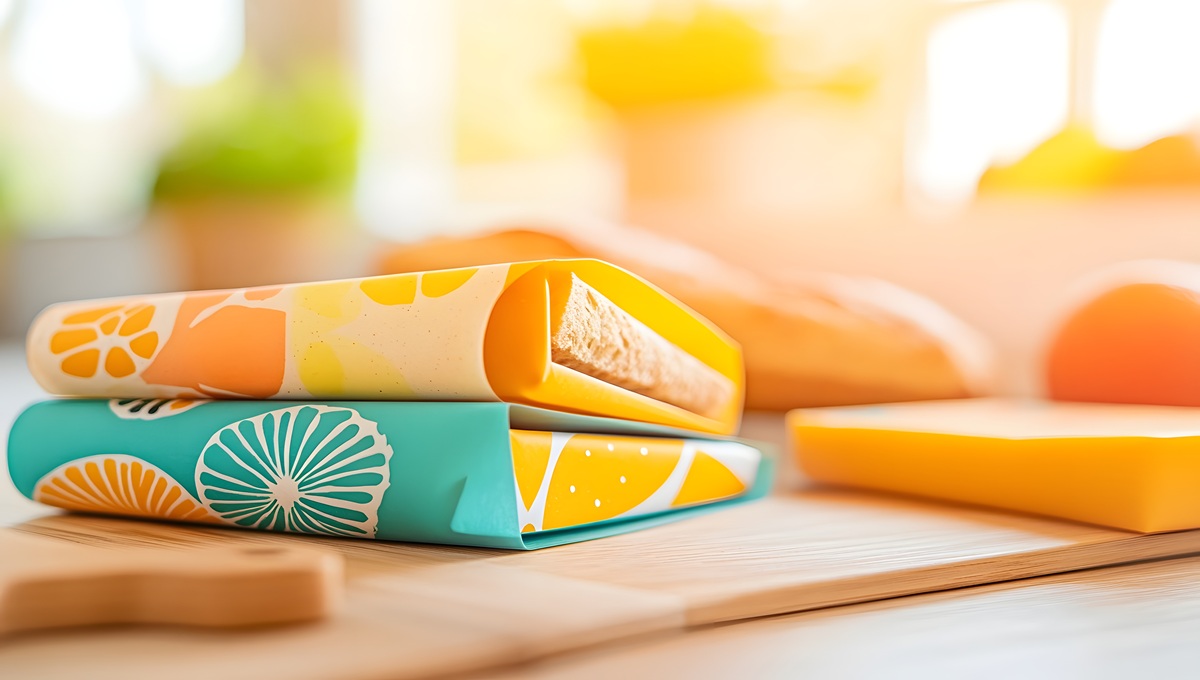
Beeswax Wrap vs Plastic Wrap: The Quick Answer
Plastic cling wrap is convenient — but it’s made from polyvinyl chloride (PVC) or low-density polyethylene (LDPE), takes 450+ years to decompose, and can leach chemicals into food, especially when heated. Beeswax wrap is made from organic cotton, beeswax, tree resin, and jojoba oil — all natural, all biodegradable.
For everyday food storage? Beeswax wrap wins on safety and sustainability. For some specific tasks, like covering raw meat or very liquid foods? Plastic wrap is still more practical.
Want the full beeswax wrap review with our top 5 brand recommendations? Read our Beeswax Wrap Review (2026) for a complete breakdown.
🚚 Need Fast & Free Shipping on Your Kitchen Supplies?
Get fast, eco-friendly delivery and exclusive deals on top-rated sustainable tools with a 30-Day Amazon Prime Free Trial.
Try Amazon Prime Free for 30 Days →Beeswax Wrap vs Plastic Wrap: Head-to-Head
| Factor | Beeswax Wrap | Plastic Wrap | Winner |
| Material | Cotton + beeswax + resin + oil | PVC or LDPE plastic | 🌿 Beeswax |
| Food safety | ✅ Food-safe, no leaching | ⚠️ Can leach at high temps | 🌿 Beeswax |
| Biodegradable | ✅ Yes — weeks in compost | ❌ 450+ years in landfill | 🌿 Beeswax |
| Reusable | ✅ 1-2 years | ❌ Single use | 🌿 Beeswax |
| Raw meat | ❌ Not safe — bacteria risk | ✅ Safe for raw meat | 🧪 Plastic |
| Microwave safe | ❌ No — wax melts | ⚠️ Some types only | 🧪 Plastic |
| Liquid foods | ⚠️ Limited — not sealed | ✅ Fully sealed | 🧪 Plastic |
| Cling ability | ✅ Good — uses body heat | ✅ Excellent | Tie |
| Cost per use | ✅ Very low after 100+ uses | ❌ Ongoing expense | 🌿 Beeswax |
| Best for | Fruits, veggies, cheese, bowls | Raw meat, liquids, microwave | — |
The Science: Why Plastic Wrap Is a Problem
Most plastic cling wraps are made from LDPE (low-density polyethylene) or PVC. While LDPE is considered relatively safe, PVC-based wraps can contain plasticizers, including DEHA (di(2-ethylhexyl) adipate) — chemicals that can migrate into fatty foods like cheese and meat.
📚 Reference: Studies have shown that plasticizers in PVC food wrap can migrate into fatty foods at room temperature, and this migration increases significantly when the wrap is heated. (Journal of Food Protection, multiple studies 2020-2024)
🔬 Scientist’s Note: The safest plastic wraps are LDPE-based and labeled ‘microwave safe’ — but even these should not touch food directly in the microwave. Beeswax wraps contain no synthetic polymers and have natural antimicrobial properties from the beeswax itself.
When to Use Beeswax Wrap vs Plastic Wrap
✅ Use Beeswax Wrap for:
- Covering bowls and plates in the refrigerator
- Wrapping cheese — breathable seal keeps it fresh longer
- Wrapping bread and baked goods
- Covering cut fruits and vegetables
- Wrapping sandwiches and snacks
- General food storage that doesn’t involve raw meat
✅ Use Plastic Wrap for:
- Raw meat, fish, and poultry — beeswax wrap cannot be sanitized safely
- Microwave use — beeswax melts above 45°C
- Very liquid or wet foods that need a completely sealed container
- High-heat situations
Cost Comparison: Which Saves More Money?
| Plastic Wrap | Beeswax Wrap | |
| Upfront cost | $3-5 per roll | $15-25 for 3-pack |
| Lifespan | Single use | 1-2 years (200+ uses) |
| Annual cost | $30-50/year | $15-25 total |
| Cost per use | $0.05-0.15 | < $0.01 |
| 5-year cost | $150-250 | $30-50 |
🌿 Over 5 years, switching to beeswax wrap saves $120-200 AND eliminates hundreds of plastic wrap pieces from landfill. The upfront cost pays for itself within weeks.
Final Verdict: Which Should You Choose?
For most everyday food storage tasks, beeswax wrap is the clear winner — safer, cheaper per use, and infinitely better for the planet. The only situations where plastic wrap remains genuinely more practical are raw meat, microwave use, and completely liquid foods.
The simplest approach: keep a small roll of plastic wrap for those specific cases, and use beeswax wraps for everything else. You’ll cut your plastic use by 80-90% without any real inconvenience.
Ready to make the switch? Read our full Beeswax Wrap Review (2026)— we tested 5 brands so you don’t have to.
Also, check out our Zero-Waste Spring Cleaning Kitchen Guide for more eco swaps that actually work.
Frequently Asked Questions
Q: Is beeswax wrap better than plastic wrap?
For most food storage tasks — yes. Beeswax wrap is food-safe, reusable for 1-2 years, biodegradable, and costs less per use over its lifetime. The exceptions are raw meat, microwave use, and completely liquid foods, where plastic wrap remains more practical.
Q: Can beeswax wrap replace plastic wrap completely?
For 80-90% of kitchen uses, yes. You may still want a small roll of plastic wrap for raw meat handling and microwave use. But for daily food storage — covering bowls, wrapping cheese and bread, storing cut produce — beeswax wrap is a complete and superior replacement.
Q: Is beeswax wrap safe for food?
Yes — beeswax wrap is made from natural food-safe materials: organic cotton, beeswax, tree resin, and jojoba or coconut oil. None of these materials leaches chemicals into food. Beeswax also has natural antimicrobial properties that help keep food fresh. Never use a beeswax wrap with raw meat due to the difficulty of sanitizing the fabric.
Related Articles
- Beeswax Wrap Review (2026): Top 5 Tested
- Zero-Waste Spring Cleaning Kitchen Guide
- Best Compostable Trash Bags Review
Affiliate Disclaimer: This post contains Amazon affiliate links. If you purchase through these links, I earn a small commission at no extra cost to you.